
The AI Amplified Scientist
AI for sensory and consumer science: better reports, sharper decks, and useful research workflows.

Dr. John EnnisCo-instructor

Dr. Vanessa Rios de SouzaCo-instructor
- Started
- September 22, 2026
- Tuition
- $2,297 full course
- Format
- 10 course weeks, with breaks
- Live sessions
- Tuesdays, 9:30-11:00 AM ET
Ten course weeks, with breaks. Part 1 resumes October 13 and ends October 29. Part 2 runs November 17 to December 17, 2026.
No meetings the weeks of October 5, November 2, or November 9. No class on Thanksgiving, November 26.
“I've totally changed how I work with AI.”
What course participants say
Feedback from professionals across sensory science, consumer insights, and data analysis who took the course.
“I would 100% recommend this course to both colleagues and clients. It successfully demystified AI and encouraged immediate application, which is essential for real learning.”

Carolyn Corbett
Vice President, CSS/datatelligence
“After all the practical experience and what I learned from the course, I've totally changed how I work with AI. I've seriously done things I never thought I could and much of it comes down to this mentality shift.”

Joey Donovan, PhD
Sensory Director, Kantar
“One of the traits that distinguishes John is the passion and excitement that he has for the subject. That excitement is contagious.”

Stephen McIngvale
Senior Research Director, InsightsNow
“Aigora's AI Mastery course does a fantastic job of pairing down the overwhelm of constant change in the world of AI by giving concrete applications for day to day work. Our niche industry isn't immune from this rapid overhaul — this course provides significant help to adapt in real time.”

Alex Feldmeyer
MANE
“I'm very impressed with the content of the course and the tips and tricks that were prepared. I've already implemented some of them with really encouraging results. I gained a lot of value just watching the prompting happen in real time.”

David Harris
Sanitarium Health Food Company
“I recommend this to my sensory community as an important step in staying ahead with what AI can do for us sensory-wise! I learned so much in just the first 5 weeks I could feel my brain neurons firing like they did at university.”

Micaela Kraft
Sensory & Consumer Insights Project Leader


What makes the Aigora AI course special
You learn in the trenches, using AI on the briefs, data, and decisions that come up in sensory and consumer insights. Ten weeks with the same cohort gives you time to try the methods at work, see what happens, and come back with better questions.

Ten weeks with people who get the work
Live classes run Tuesdays, 9:30-11:00 AM ET. On scheduled course weeks, you can also join office hours on Thursdays, 10:30-11:30 AM ET and Thursdays, 4:30-5:30 PM ET. Lectures are recorded, so you can revisit them. The cohort learns together across ten course weeks, with scheduled breaks, then stays connected in a private LinkedIn group with 80+ past participants.
Bring the messy brief
Office hours are where you get unstuck and make room to play. Sometimes we work through a participant's real challenge. Sometimes we make imaginary album covers together just to see what happens. Both help you get comfortable experimenting.
The mindset shift shows up in your work
By week ten, you're not searching for a perfect prompt. You know how to direct the work, check the result, and adjust when the data is messy or a stakeholder isn't convinced. The impact shows up in work you can finish and decisions you can support.
Taught by John and Vanessa, together
Dr. John Ennis and Dr. Vanessa Rios de Souza teach the course together as co-instructors. Both use AI every day in sensory and consumer insights, and both bring that work into the classroom. The course keeps changing because their work keeps changing.
A lunch session can spark an idea. Ten weeks gives you time to use it at work, hit a snag, bring that snag to office hours, and try again with the cohort beside you.
That mix of useful work and play comes through in the reviews. Participants call the course excellent, say the office hours helped with their own challenges, and mention how much fun they had. Read what participants say.
The current cohort started September 22, 2026. Ten course weeks, with breaks. Part 1 resumes October 13 and ends October 29. Part 2 runs November 17 to December 17, 2026. No meetings the weeks of October 5, November 2, or November 9. No class on Thanksgiving, November 26. Enrollment is still open.
Bringing several people from the same team? Group rates and internal training are available. Ask about a group rate.
Praise for Aigora internal training
“The course was eye opening for the team and myself. We learned ways to use AI that we did not know before, and it got the team moving. We're already seeing a positive difference!”
Alice Ping
Head of Sensory, Consumer Science and Flavours, Mead Johnson
Choose your enrollment
The current cohort started September 22, 2026. Ten course weeks, with breaks. Part 1 resumes October 13 and ends October 29. Part 2 runs November 17 to December 17, 2026. No meetings the weeks of October 5, November 2, or November 9. No class on Thanksgiving, November 26. Enrollment is still open. Enroll for all ten weeks or choose one five-week part. Lectures are recorded and posted on the course resources page, along with the topics covered and lessons learned in office hours.
Every course includes
- Weekly office hours with Dr. Ennis
- Private LinkedIn group of 80+ past participants
- One year of the AI Toolkit ($1,000 value)
- Certificate of completion and LinkedIn badge
Part 1
Weeks 1-5 · The no-code strategist
September 22 to October 29, 2026, with no meetings the week of October 5. Resumes October 13.
Current price $1,397
- Copilot PowerPoint from existing reports
- Data synthesis and narrative
- Privacy-first prompting
- Image and video generation
- 5 weeks of live instruction and recordings
Full course
10 course weeks · From reports to working systems
Saves $497 against buying both parts.
Current price $2,297
Ten course weeks, with breaks. Part 1 resumes October 13 and ends October 29. Part 2 runs November 17 to December 17, 2026.
Use code 100OFF at checkout for $100 off the full course.
- Everything included in Part 1
- Everything included in Part 2
- Full 10-week journey, live and recorded
- Knowledge synthesis, visual storytelling, and executive decks
- AI-assisted analysis, R coding, and Shiny apps
- Split seat available: one colleague per part; both get recordings, materials, and LinkedIn access; the AI Toolkit seat goes to one named person
Part 2
Weeks 6-10 · The low-code power user
November 17 to December 17, 2026. No class on Thanksgiving, November 26.
Current price $1,397
- AI-assisted R coding
- Interactive Shiny apps
- Git, version control, and reproducible systems
- 5 weeks of live instruction and recordings
Other ways to enroll
For teams enrolling multiple colleagues.
Every session, transcript, prompt, and dataset.
50% off any tier, with updated content each cohort. Prior enrollment verification required.
Special pricing for academic and nonprofit organizations. Eligibility verification required.
Meet your instructors

Dr. John Ennis
CEO, Aigora
With over 30 years in sensory science, a PhD in Mathematics, and a postdoctoral focus on AI, Dr. Ennis is regarded as the world's foremost authority on applying artificial intelligence to sensory and consumer science. Author of 50+ publications and 4 books.
LinkedIn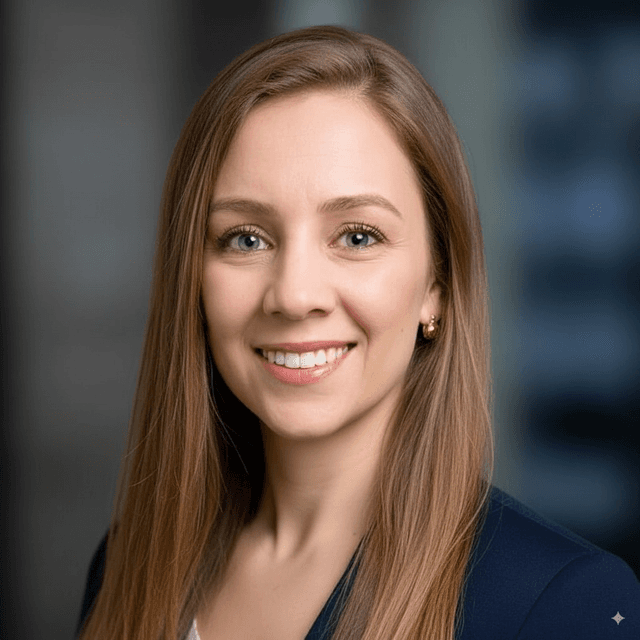
Dr. Vanessa Rios de Souza
Director of Client Solutions, Aigora
70+ scientific publications. Co-author of Data Science for Sensory and Consumer Scientists. PhD in Sensory Science with deep expertise across global consumer research programs.
LinkedInFrequently Asked Questions
Can I still join the current cohort?
The current cohort started September 22, 2026. Ten course weeks, with breaks. Part 1 resumes October 13 and ends October 29. Part 2 runs November 17 to December 17, 2026. No meetings the weeks of October 5, November 2, or November 9. No class on Thanksgiving, November 26. Enrollment is still open. Lectures are recorded and posted on the course resources page, along with the topics covered and lessons learned in office hours.
When are the live sessions and office hours held?
Live sessions are held Tuesdays, 9:30-11:00 AM ET. Weekly office hours with Dr. John Ennis are offered Thursdays, 10:30-11:30 AM ET and Thursdays, 4:30-5:30 PM ET, so you can join whichever fits your schedule. Ten course weeks, with breaks. Part 1 resumes October 13 and ends October 29. Part 2 runs November 17 to December 17, 2026. No meetings the weeks of October 5, November 2, or November 9. No class on Thanksgiving, November 26. Lectures are recorded and posted on the course resources page, along with the topics covered and lessons learned in office hours.
What are the technical prerequisites for Part 2?
Part 2 assumes the data science literacy typical of a sensory or consumer scientist: familiarity with data structures, basic statistics, and working with tabular data. No advanced programming background is needed; the course teaches you to use AI as your coding partner across the entire workflow, from building your tech stack and writing R scripts to version control and deploying interactive apps.
Are the sessions recorded?
Yes. Lectures are recorded and posted on the course resources page, along with the topics covered and lessons learned in office hours. Your team can revisit the material on their schedule. If live timing does not work for you, course recordings and resource access are available separately. Contact us to discuss access.
What if I have limited coding experience? Can I still take Part 2?
Yes. If you have the data science background typical of sensory and consumer scientists (understanding data structures, basic statistics, and working with spreadsheets), Part 2 will meet you where you are. AI does the heavy lifting as your "Pair Programmer," generating code while you direct the architecture and logic. By Week 9 you will have built and deployed an interactive web app.
I work primarily in Sensory Analysis. Is this course too focused on Consumer Insights?
No. The AI methods we teach are agnostic. Part 2 covers how to automate rigorous statistical workflows that sensory analysts spend hours coding manually, build interactive web applications, and deploy data-driven tools for any research domain.
What happens if I miss a live session?
Lectures are recorded and posted on the course resources page, along with the topics covered and lessons learned in office hours. You can ask questions in the private LinkedIn group and during weekly office hours.
How much time commitment is expected per week?
Expect to spend 3-5 hours per week, including live sessions, self-paced learning, and project work.
What software do I need?
All you need is a modern web browser and a stable internet connection. We reference Gemini, Flow, Claude, Copilot, and other mainstream AI tools, but no paid software purchase is required.
Can I pay by invoice instead of Stripe?
Each enrollment tier has a "Request an invoice" option next to the Stripe checkout button. Choose it and we will send an invoice payable by wire, ACH, or check. Bringing a team? Contact us to discuss group rates. Your seat is confirmed once payment clears.
I took the course before. Can I get a discount to retake it?
Yes! Returning students receive 50% off any enrollment tier. Each cohort features updated content, new case studies, and the latest AI tools, so there is always something new to learn. Contact us to verify your prior enrollment and receive your discount.
How does a split seat work?
A split seat puts two people from the same organization through one Full Course enrollment. One attends Weeks 1-5 live, the other attends Weeks 6-10 live. Both get every session recording, all course materials, and access to the private LinkedIn group, so each person can follow the half they did not attend on their own schedule. Each person earns a certificate for the part they attended. Two people who both want all ten weeks live need two enrollments; contact us to discuss group rates. One thing to know before you split a seat: the AI Toolkit license is a single seat and has to be assigned to one named person. If both people need their own Toolkit access, contact us before enrolling and we will quote a second license.
Who gets a certificate?
Anyone who attends gets a certificate and a LinkedIn badge for the parts they attended. Complete the full ten weeks and the certificate covers the full course. Attend Part 1 or Part 2 only, whether you enrolled in that part or took a split seat with a colleague, and the certificate names that part. Two people splitting one enrollment each get their own certificate for their own half.
Still have questions?
Tell us about your enrollment question and we will help you choose an option.
Step 1
Secure enrollment + access toolkit
Each enrollment tier has a "Request an invoice" option next to the Stripe checkout button. Choose it and we will send an invoice payable by wire, ACH, or check. Bringing a team? Contact us to discuss group rates. Your seat is confirmed once payment clears. We send the onboarding kit after payment is confirmed.
Step 2
Join the private LinkedIn group
You'll join the private LinkedIn group, receive the onboarding resources, and meet your fellow participants.
Step 3
Join your course sessions
The current cohort started September 22, 2026. Ten course weeks, with breaks. Part 1 resumes October 13 and ends October 29. Part 2 runs November 17 to December 17, 2026. No meetings the weeks of October 5, November 2, or November 9. No class on Thanksgiving, November 26. Enrollment is still open. Lectures are recorded and posted on the course resources page, along with the topics covered and lessons learned in office hours. If live timing does not work, contact us about recordings and resource access.
Prefer to pay by invoice? Every enrollment tier has a request an invoice option. We handle your information according to our Privacy Policy.