

Simulated Research, Real Insights
THEUS moves beyond the limitations of traditional methods—slow, expensive, and limited in scale. By creating intelligent digital twins of both consumers and products, THEUS enables Simulated Research that unlocks faster, deeper, and more actionable insights than ever before.

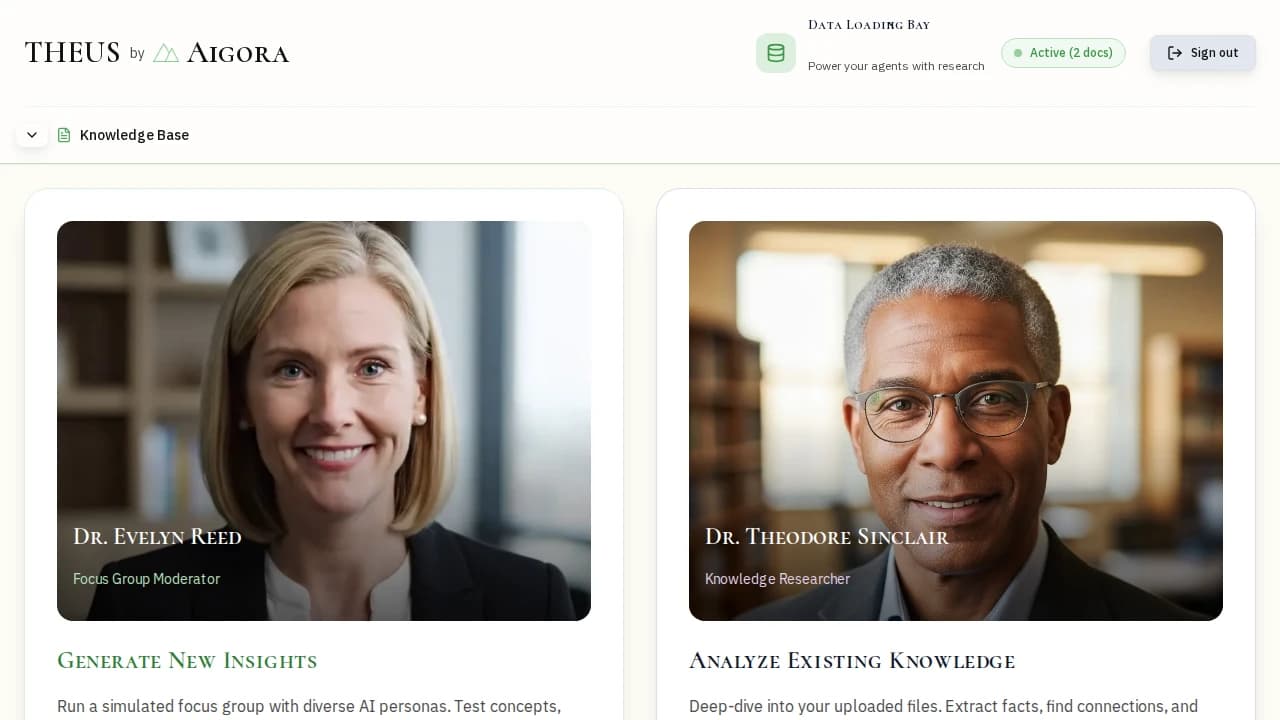
Two ways to explore: Generate new insights with Dr. Reed or analyze existing knowledge with Dr. Sinclair
Founding Partner Program
Join THEUS as a Founding Partner and help shape the future of Simulated Research
Download the Founding Partner Program deck to view on your device.
Download PDFNot Another AI Tool—A Research Platform
Built on purpose-built research methodology, not generic enterprise AI. THEUS creates data-grounded digital twins and bidirectional models for true consumer simulation.

Data-Grounded Digital Twins
THEUS creates intelligent digital twins trained on actual behavioral data—not demographic stereotypes. Model both consumers AND products for realistic simulation of how changes affect specific segments.

Simulate Any Research Type
Virtual focus groups, simulated home use tests, packaging and messaging tests, sensory research, and concept testing—all in hours instead of weeks.

Rich, Actionable Data
Full transcripts with rich qualitative data, quantitative metrics (liking scores, ratings, rankings), and emotional insights with sentiment analysis—all traceable to source.
How THEUS Works
Four steps from historical data to actionable insights
Create Data-Informed Agents
Ingest historical data—surveys, panel results, purchase data, sensory profiles—and build realistic digital twins configured with behavioral nuances and demographics.
Run Realistic Studies
A dedicated Researcher Agent facilitates studies using established research protocols, acting like a human moderator guiding conversations and probing for insights.
Simulate Any Research Type
Virtual focus groups, simulated HUTs, packaging tests, sensory research, and concept testing—all with sufficient data grounding.
Analyze Rich Data
Full transcripts with qualitative data, quantitative metrics (liking scores, ratings, rankings), emotional insights, and sentiment analysis.

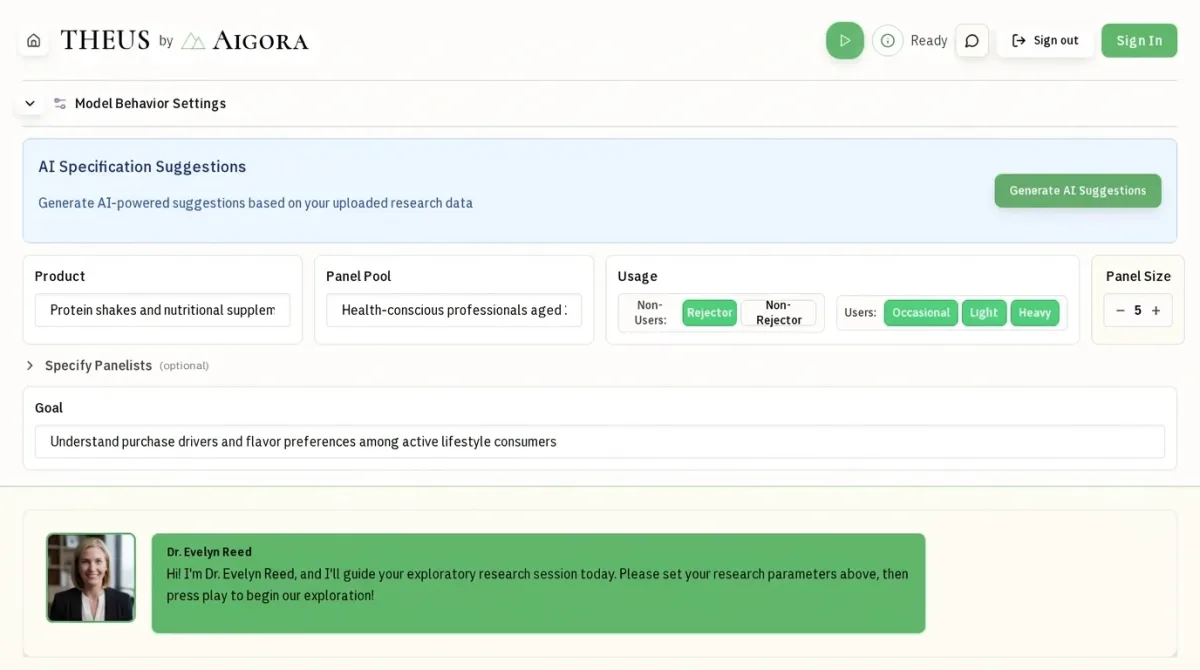
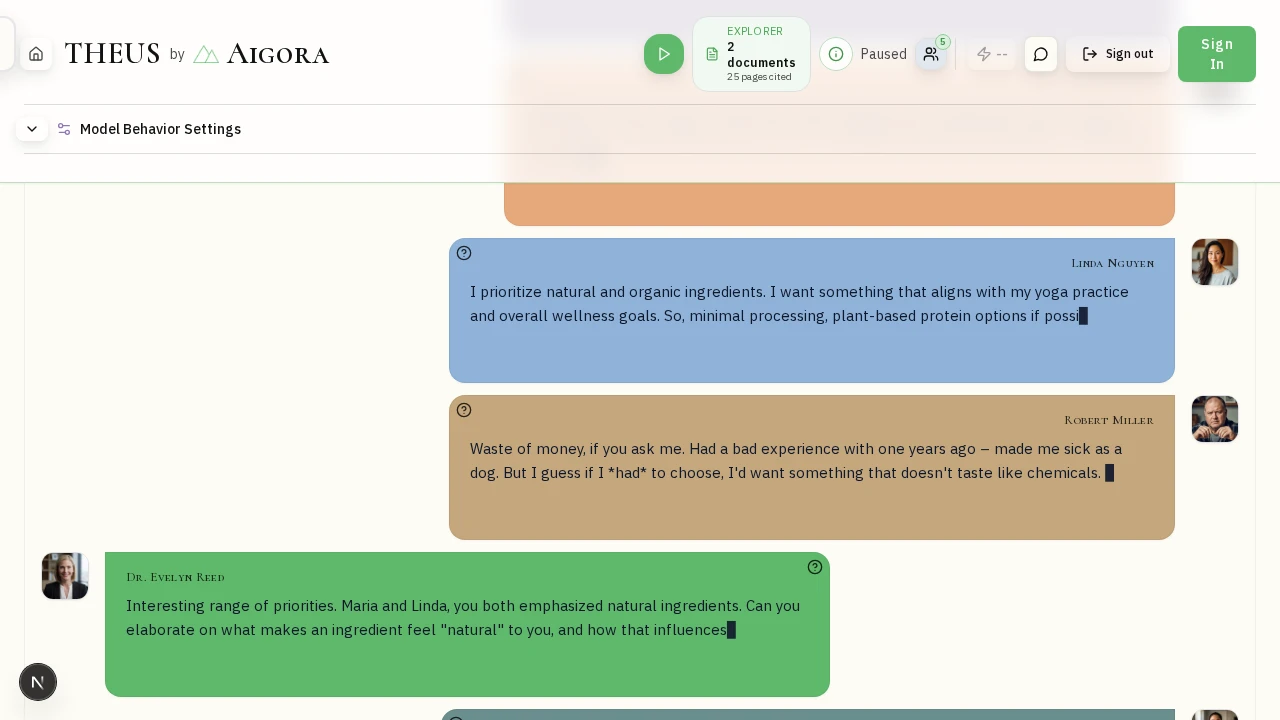
The Focus Group Simulator
Dr. Evelyn Reed
Data-Driven Digital Twins at Scale
- Data-Grounded Digital Twins
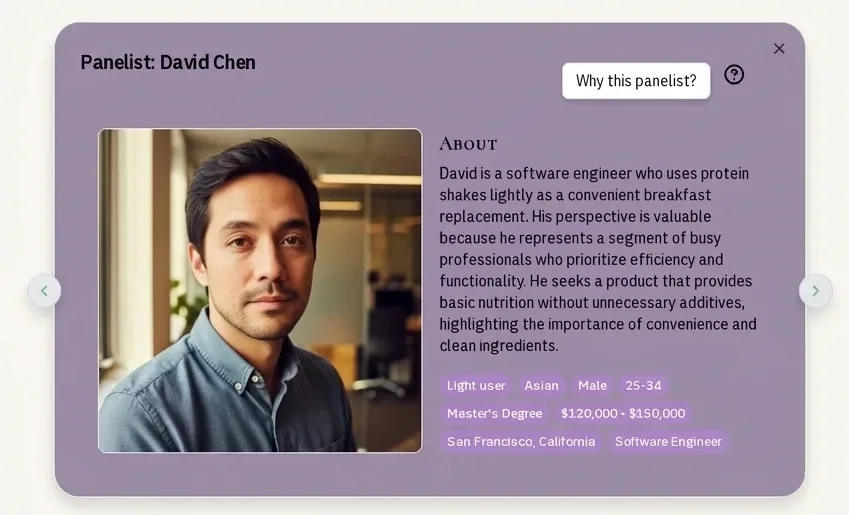
Panelists are trained on actual behavioral data—surveys, panel results, purchase data, and sensory profiles—not demographic stereotypes or persona roleplay.
- Authentic Cognitive Diversity
Real consumers aren't always articulate. Panelists have verbal tics, response tendencies, blind spots, and hot buttons—creating genuine dynamics, not idealized responses.
- Photorealistic Presence
AI-generated avatars with diverse representation across age and ethnicity. Specify individual panelist descriptions or let AI fill the panel automatically.

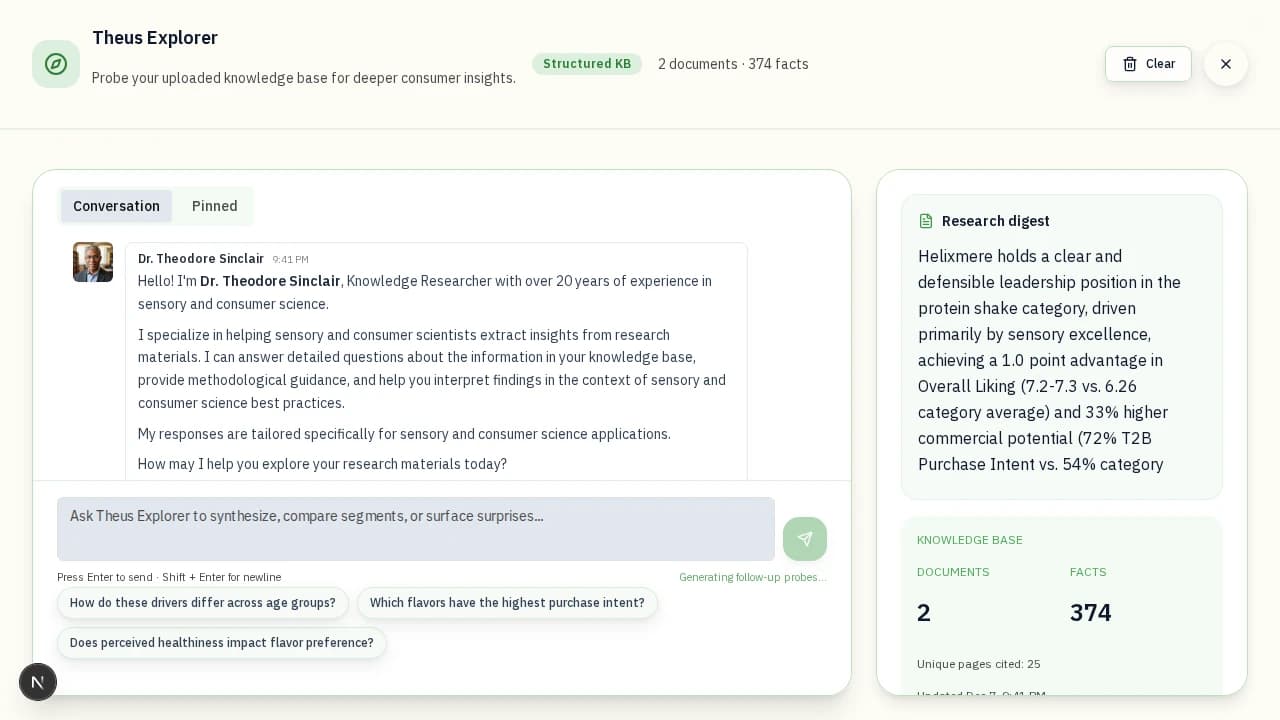
The Knowledge Explorer
Dr. Theodore Sinclair
Your Domain-Expert AI Analyst
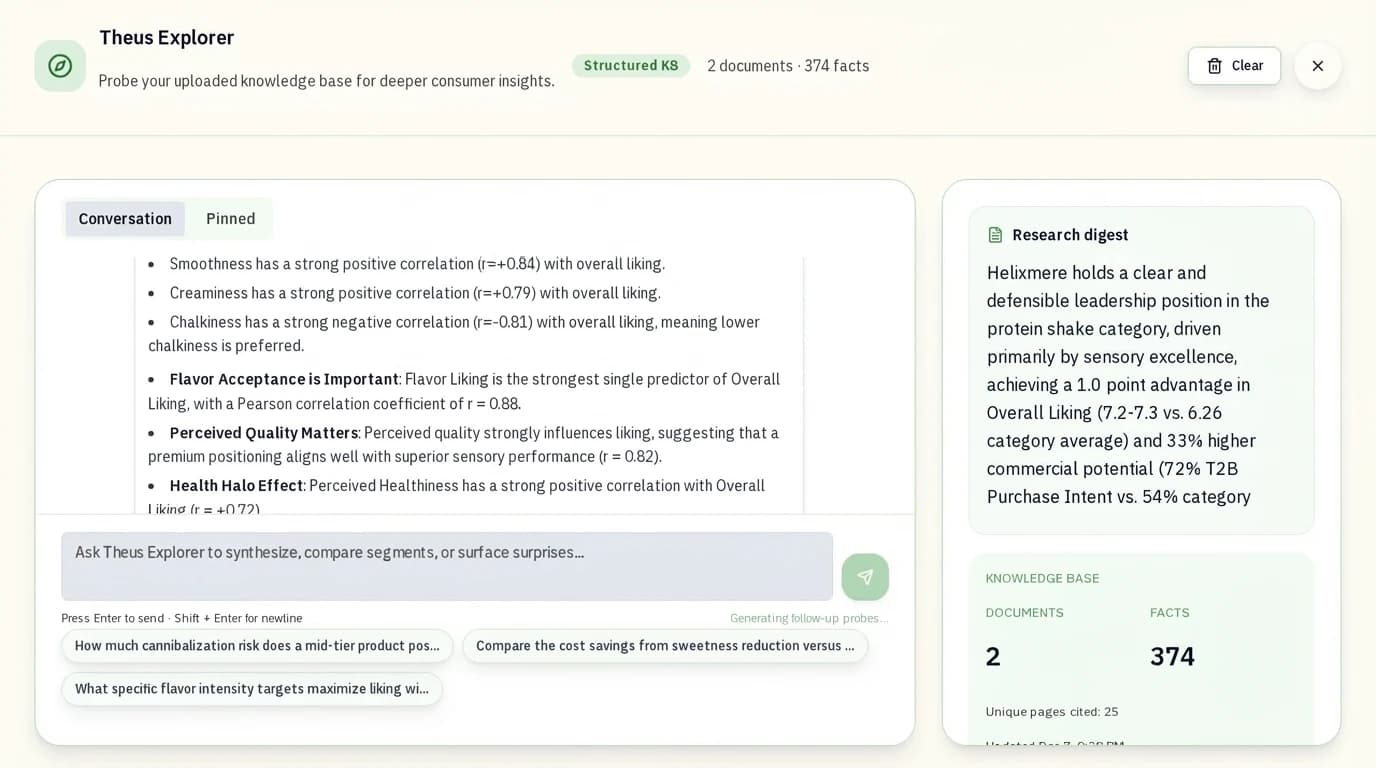
- Cross-Study Synthesis
Find patterns across multiple studies. Identify gaps. Generate hypotheses grounded in everything your company already knows.
- Research Design Support
Design new studies informed by historical findings. Dr. Sinclair flags when questions exceed available data.
- Whiteboard Visualization
Explain findings to stakeholders with AI-generated schematics—presentation-ready diagrams for executive briefings.
- Traceable Truth
Every claim backed by a specific Fact ID with page-level citations. Pin insights, then Explain for grounded reasoning with explicit source citations.
Built for Regulated Environments
Explainability and traceability aren't afterthoughts—they're the foundation. Every insight links back to its source. Every decision can be audited.
Data lives in Volatile Memory (RAM) only. Simulation data is auto-deleted after 24 hours. Avatars after 72 hours.
4-stage multimodal pipeline (Normalize → Visual Understanding → Extract → Validate) generates 20-30 atomic facts per page with full statistical context.
Tab-Scoped Context. Run multiple distinct projects in parallel tabs without data cross-contamination.
Your proprietary research data is NEVER used to train our models.
Built on Google's Agent Development Kit (ADK). Agentic architecture with dedicated Researcher Agents that follow established research protocols.
From Research to Boardroom in Seconds
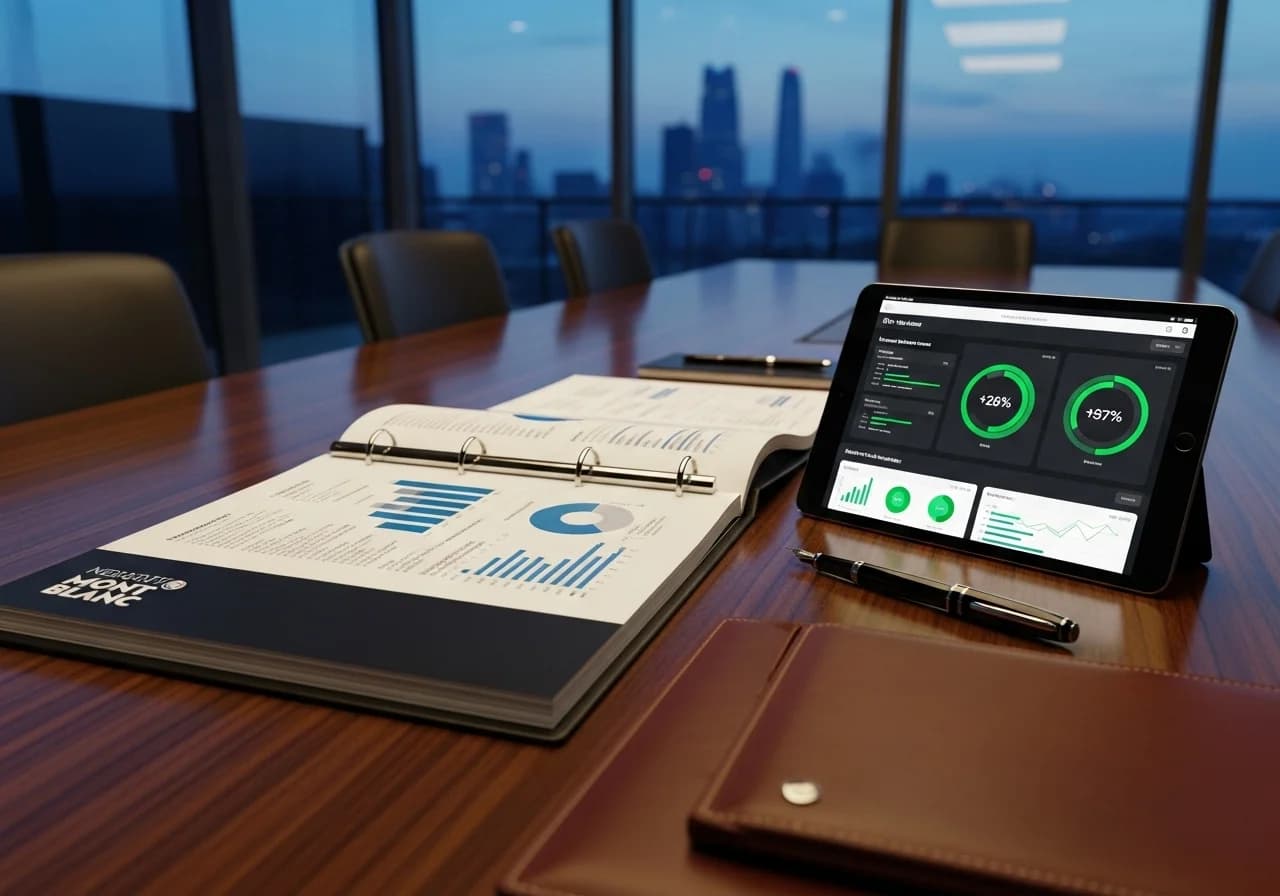
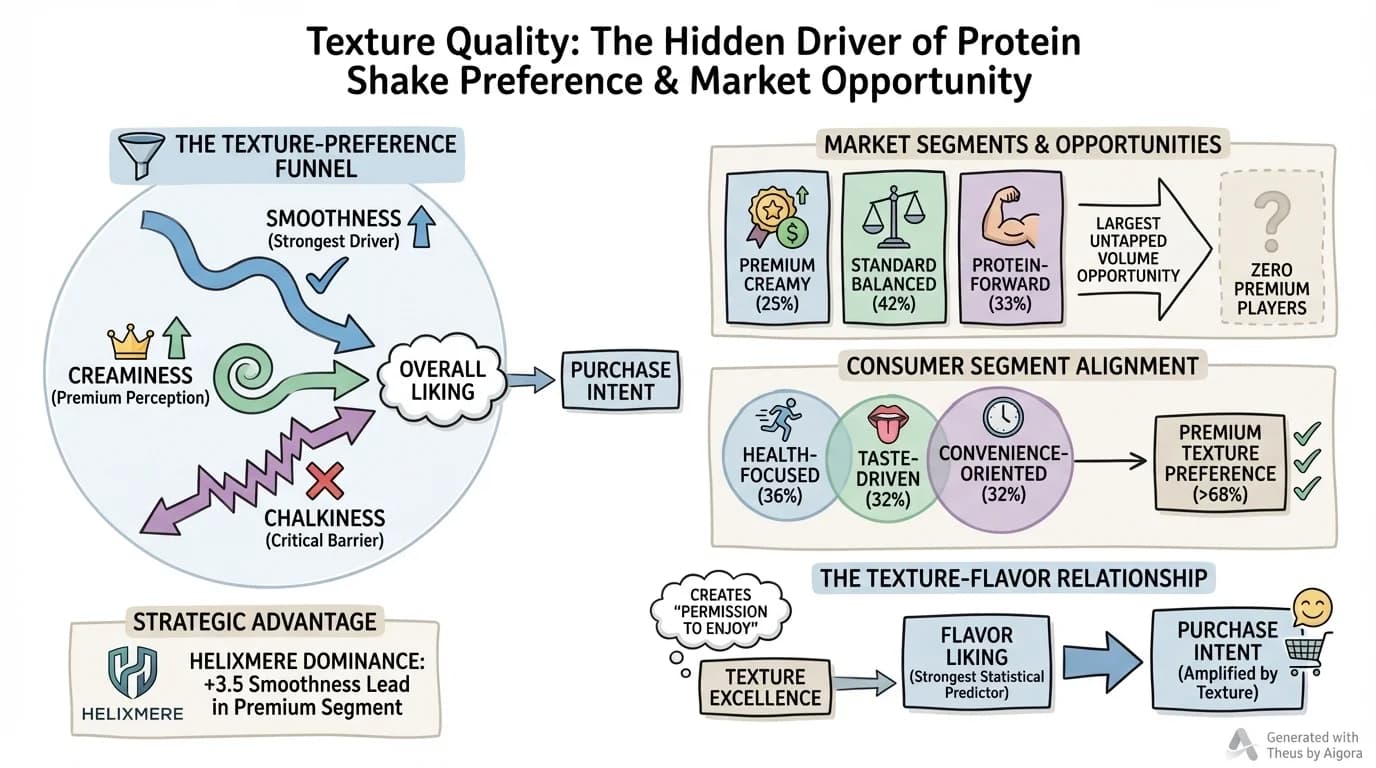
Ask Dr. Sinclair to visualize any finding, and frontier image generation creates presentation-ready schematics that communicate complex insights to senior management.

Generated from prompt:
"Visualize the key drivers of protein shake preference from our category study"

Built for Enterprise Trust
- SOC 2 Type II compliant infrastructure
- Your data is never used to train AI models
- 24-hour automatic data deletion
- OAuth-only authentication (Google, Microsoft)
- GDPR and CCPA compliant
Domain Expertise Meets Frontier AI
THEUS is powered by Aigora, trusted by Fortune 500 companies since 2019 to solve their most complex sensory and consumer science challenges.

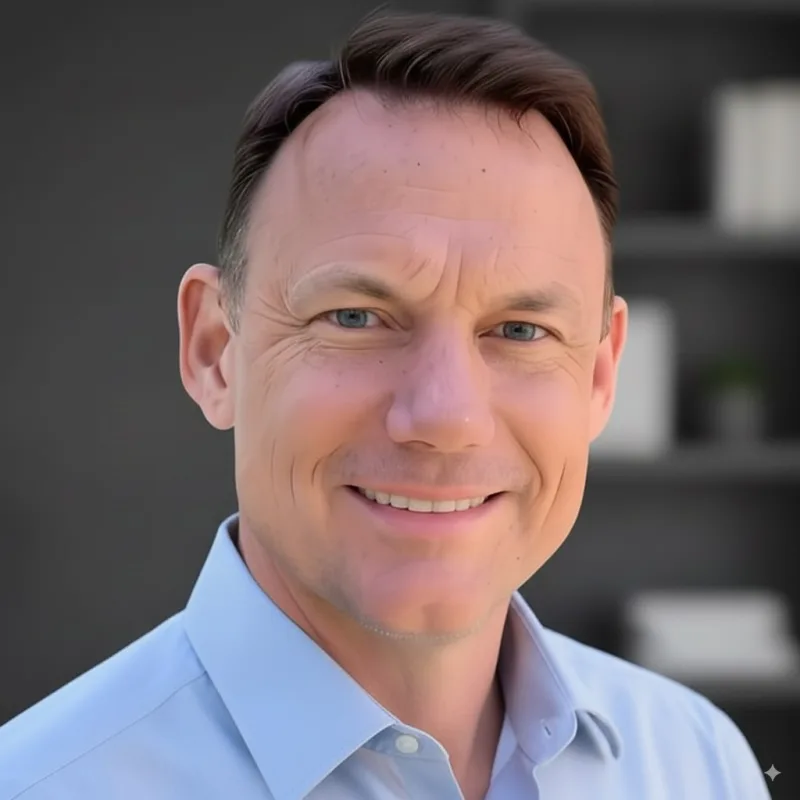
Dr. John Ennis
Founder & CEO, Aigora
- 30+ years in sensory and consumer science
- PhD in Mathematics, postdoctoral research in computational neuroscience
- 50+ peer-reviewed articles and 4 published books
- "Researcher of the Future" award (Food Quality and Preference, 2013)

Powered by Aigora
Enterprise-grade research infrastructure
Aigora brings deep domain expertise in sensory and consumer science to AI-powered research infrastructure. The same methodological rigor trusted by Fortune 500 companies now available as intelligent software.
- Trusted by Fortune 500 companies since 2019
- Purpose-built for consumer insights teams
- Domain expertise encoded into every feature
Key Concepts
The terminology behind THEUS and Simulated Research
- Simulated Research
- A research methodology that uses AI-powered digital twins to replicate consumer studies—focus groups, home use tests, concept tests—in a virtual environment, delivering results in hours instead of weeks at a fraction of traditional cost.
- Digital Twin
- An AI-generated virtual representation of a real consumer or product, trained on actual behavioral data (surveys, panel results, purchase history, sensory profiles) rather than demographic stereotypes. THEUS creates digital twins of both consumers and products for bidirectional simulation.
- Bidirectional Modeling
- THEUS's approach of creating intelligent models of both consumers and products simultaneously, enabling realistic simulation of how specific product reformulations affect specific consumer segments.
- TKB (THEUS Knowledge Base)
- A proprietary file format created by a 4-stage multimodal pipeline (Normalize, Visual Understanding, Extract, Validate) that generates 20–30 atomic facts per page with full statistical context and source provenance.
- Cognitive Diversity
- A design principle ensuring AI-generated panelists reflect realistic intelligence distributions—including confused, inarticulate, or circular responses—rather than the uniformly coherent output typical of standard AI roleplay.
Frequently Asked Questions
What is THEUS and how does it work?
How is THEUS different from prompting ChatGPT to act like a consumer?
Is THEUS SOC 2 compliant?
What types of research can THEUS simulate?
What is a TKB file and how does knowledge ingestion work?
Who built THEUS?
From Question to Insights in Under 20 Minutes
Run virtual focus groups, simulated home use tests, and concept tests at a fraction of the cost of traditional research. THEUS delivers enterprise-grade Simulated Research with full audit trails.