AI Expertise for Consumer Insights

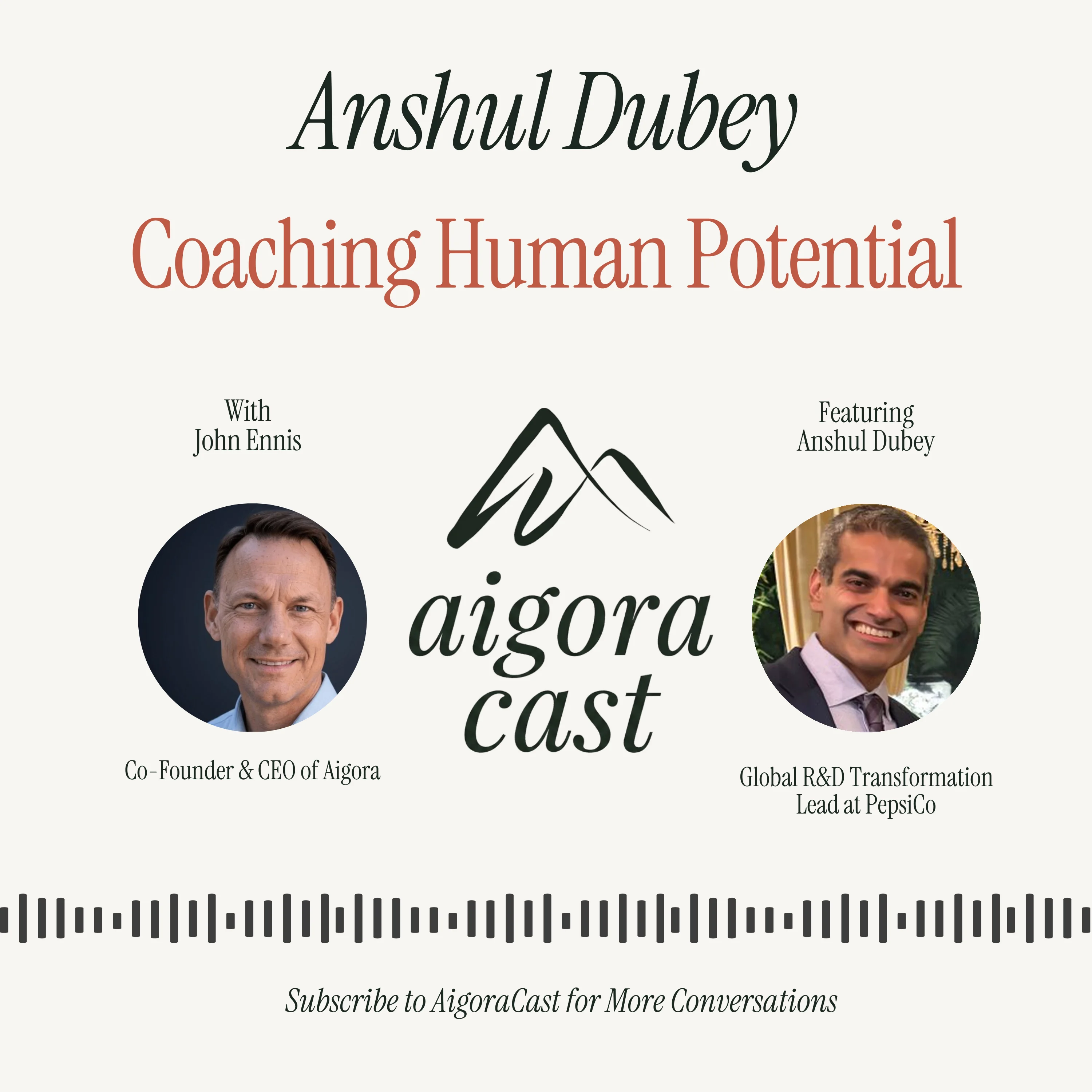
AigoraCast · Episode 137
Welcome to AigoraCast. Conversations with industry experts on how new technologies are impacting sensory and consumer science.
Hi, I'm Dr. John Ennis, CEO at Aigora.
In this episode, I had the pleasure of speaking with Dr. Anshul Dubey from PepsiCo.
We talked about the distance between an ambitious AI strategy and the day-to-day reality of adoption, focusing on what actually changes the way people work, and why advanced users and hesitant teams can end up so far apart.
I hope you enjoy this conversation as much as I did, and remember to subscribe to AigoraCast to hear more conversations like this one in the future!
Anshul Dubey participated in his personal capacity. The views expressed are his own and do not represent PepsiCo.
Dr. Anshul Dubey is a senior executive and digital transformation leader at PepsiCo, where he serves as Global R&D Transformation Lead. During a PepsiCo career spanning roughly two decades, he has progressed from R&D project engineer to senior director and built expertise across digital product management, global business services, and enterprise R&D transformation.
Anshul's work focuses on translating emerging technology into practical improvements in research, manufacturing, and everyday workflows. He has helped advance PepsiCo's use of machine vision, deep reinforcement learning, and autonomous systems in food manufacturing, including work connected with Microsoft Project Bonsai. He is especially interested in closing the gap between ambitious AI strategy and meaningful day-to-day adoption.
Anshul earned a Ph.D. in Chemical Engineering from the Georgia Institute of Technology after undergraduate study in Chemical Engineering at the Indian Institute of Technology Madras. His early research spanned machine learning, computational protein engineering, and process control, with publications in the Journal of Machine Learning Research and other peer-reviewed journals.
Subscribe to AigoraCast and leave a review if you enjoy the conversation.
Lightly edited for readability. Speaker order and meaning preserved.
John Ennis: Welcome back, everyone, to another episode of AigoraCast. Today I'm very happy to have my friend, Dr. Anshul Dubey, on the show. Dr. Anshul Dubey is the Senior Director of the Global R&D Transformation and Digital Capabilities Team in PepsiCo's Strategy and Transformation Organization. He leads the strategy and deployment of digital, data analytics, and AI-enabled capabilities across global research and development, driving the modernization of processes to accelerate innovation and productivity. With over 20 years of experience, Dr. Dubey has built a career at the intersection of science, technology, and business impact. He has led R&D for multiple billion-dollar brands, including Lay's, Tostitos, and Cheetos, and previously formed the R&D Applied AI team to create intelligent automation solutions. A two-time recipient of the PepsiCo Academy of Science Award, he holds a PhD in Chemical Engineering with a specialization in machine learning from Georgia Tech. So, Anshul, welcome to the show.
Anshul Dubey: Thank you, John. Thanks for having me. Great to be here again.
John Ennis: Oh, it's really... yeah, it's a pleasure. You're a very like-minded person, so I'm really happy to have you on the show, you know? One of—I knew actually, you know, we did this panel together at IFT, and as soon as, in one of the warmup sessions, you were talking about the differences between Gemini being good at vision and Claude being better at writing, this kind of thing, I thought, "All right, this is my kind of guy." So, I think that's really when the friendship started. So, maybe we can just kind of start about, you know, can you talk just a little bit about your journey for maybe the listeners who don't know you very well, and then we get into your thoughts on like what you're seeing and, you know, where your ideas about where things are headed.
Anshul Dubey: Sure, John. I'll try not to go too far back in my journey. But as you know from my bio, I'm a chemical engineer, so I did my graduate in chemical engineering and then also PhD from Georgia Tech, also in chemical engineering. This is now, of course, 20—well, 20—more than 20 years ago. So I did... I was dabbling into machine learning during my PhD. This was a pretty novel field back then, if you remember, especially as it was getting to applied ML. So I was specifically working in sort of genomics, protein, protein synthesis, and some biomolecular engineering, and trying to use machine learning to identify or predict certain functionalities of proteins, which was novel. Boy, this is back in the day when if you had more than 20 nodes in your neural networks, you were overfitting the data, so... (Laughter) That ages us! But then, you know, PepsiCo was not in the radar after I graduated. It just so happened that the field I researched in wasn't really mature enough for industrial applications, so food engineering became sort of a new thing that I thought, "Why not? Let me give it a shot." And I loved it! The next 15 years, I joined R&D, sort of stepped away from the machine learning world, did a lot of product development, basic chemical engineering at PepsiCo, worked in different brands, got used to industry corporate culture, but then came back to it about, let's say, 7-8 years ago. As you saw in my bio, we started getting a little serious about AI and machine learning, we were starting to do some automation, machine vision. So I created the team, since I had this background, you know, I was tapped on the shoulder to go figure this out. And I fell back in love with ML, and started understanding how the field had developed over the last 10-15 years. And then that led me to my essentially this new organization, Strategy and Transformation, that does the digital strategy across PepsiCo. And over the last 4-5 years, now I've done everything from product management, some supply chain applications, to now back in R&D the last 2-3 years, where I'm holistically planning what capabilities R&D needs globally. So it's exciting. I've loved every minute of it. I feel like it's been good to have deep business context working in R&D for more than a decade, and now working with of course the technical side, the Strategy and Transformation organization has teams that are deep in AI platforms, deep in data engineering, so I get the best of both worlds in a way, and I love the fact that I get to connect the dots and figure out what R&D needs, what's happening in technology, and combine those two.
John Ennis: Yeah, well, Pepsi's extremely lucky to have you, because I think support from the top is so important. I see it all the time with our clients that right now if people don't have access to the best tools they can get, they're at an enormous disadvantage. And I think it's really great that you're up there, that you actually appreciate that this is coming, it's happening, we have to get ready, prepare. I also just want to say I think it's really interesting how your career development has paralleled mine. Because, you know, I started after I did my PhD, I was writing spiking neural networks in FORTRAN, and the same sort of thing, these are very small neural networks, right? And I went away from it, went through consulting, and then, you know, mid-2010s, it became clear data science was a big deal, and then late 2010s, it was like obvious that AI was going to happen, so I got back into it. And it was really kind of... yeah, that's quite interesting. How do you think it's changed when you look back, you know, the approaches now versus the approaches when you were doing your early machine learning work?
Anshul Dubey: Well, you know, I think back in the day, there was this debate saying, "Okay, where you can use machine learning, where you cannot, and what it can do." It was always a very supervised predictive models, you've got to have a whole lot of data, you've got to have clean data. There were so many limitations in how people perceived it. I think it stayed for the last... for the next 10-15 years. Like, even back when I came back to it 7-8 years ago, we were doing computer vision. We were getting better at creating things like synthetic data or solving that issue, but it always still was a predictive model. Nobody was talking about AGI, right? It was still very much reinforcement learning and certain aspects of it. And it really just blew up in the last 4-5 years. Honestly, I don't know if anybody really predicted, even when we started creating medium language models or even finally LLM models, I've read plenty of articles on like how it was surprising for even the people who created the models of what it would be able to do and how generic it can get. So, I don't know if that's a great answer, but it's huge now. It almost feels like we're struggling to find areas where we cannot apply AI, right? It's almost reversed itself.
John Ennis: Right. No, I agree with that. It's gotten to be so flexible and powerful, and it's interesting, like Yann LeCun, you know, at Meta, really, I think he's actually right that eventually there is a ceiling with LLMs, but it seems to be much higher than anyone expected, like much, much higher. And yeah, so that might lead to the next question. So as we were talking before the show a little bit about, you know, there's a lot of kind of philosophical ideas about what's going to happen, but I think that the question that's most relevant is like, you know, what is it like kind of on the ground right now, day-to-day? Where are people actually getting value from AI? And, you know, I have—I can share my thoughts, but I'd love to hear kind of what are you seeing as immediate use cases, and then maybe short-term use cases. Where should organizations be focusing for the next say 3 to 6 months?
Anshul Dubey: Yeah, I think that's a kind of a day-to-day struggle, I feel like every week... (Laughter)
John Ennis: "This week, today! What should they focus on today?" (Laughter)
Anshul Dubey: Everyone's getting impatient, too, right? Because all of us here can actually see some amazing stories of what AI is able to do, but the on-the-ground reality, especially in industry—I'm sure PepsiCo's not alone—things take a little longer, right? Because there are risks associated with that, which all of us need to be aware of, right? IP and how do you box it in a way that our data is protected, so it just slows things down a little bit in terms of even the use cases we know it can do today, how fast we can actually get it deployed. And with the speed that things move, like sometimes by the time you're ready to deploy, like the technology has moved on, so... (Laughter) But there are, in terms of things we can do, we were just talking about if we look at just our day-to-day, and I think this is real for all of us, yes, there are certain applications we need to create, for example, in PepsiCo R&D, but the biggest benefit is going to come from everybody in our organization getting to use AI more effectively. And I think there are still gaps there, right? Not everyone's on the same playing field in the sense of they know how to use it, where to use it, how to effectively even leverage tools that everyone has now access to. And that's one of the big learning gaps that I'm thinking how to close faster. There's a big spectrum. There's a small percentage that's enthusiasts that's like out there trying the newest, and they're spending a lot of time, you know, they're putting aside like even at executive level, I was telling you about some enthusiasts we have, they've set aside time, they've played with it, they've figured out how to use it, they've created workflows. And then on the other side of the spectrum, we have people who tried it maybe a few months ago or maybe 6 months ago, didn't like what it was doing, moved away from it. So, I think if we can close that gap and have everyone realize, you know, 15-20% productivity, whatever it is they're getting, and you multiply it by the whole organization, that's huge.
John Ennis: Right, right. No, I agree with that. And I do think what you said about... You know, because we teach our AI course, and I see, yeah, of course, very uneven surface in terms of experience, and it's interesting, the personality of the user. Like, some people expect that there are some rules, and if they follow them, they can use AI. They kind of want to be told, "Okay, how do I do it?" And I think it's challenging because, like you said, everything's moving so fast, the technology's new, no one—I mean, I have my own opinions, you know, but there is no true textbook yet for how to use AI. And so we're all figuring it out, and I think that being willing to just try stuff is so important, that people need to just... You know, I say this in the course, just anything you do, ask yourself, "How can I use AI to help me with this?" Now, the flip side of this that I see is there's a balancing act between using AI and just getting lost in the... You know, you ask for something, you get a big wall of text, and then you're locked out of your own research. So it definitely needs to be—we call it "dragon taming" in our course—that you have to like hold... You have to learn how to work with the AI in small batches, you know, in little cycles along the way in your workflow, rather than... It's not going to do your job, right? But it can help you a lot along the way. So that kind of leads to the maybe the next question I have for you, which is like, how do you see kind of the nature of work changing? What's the kind of... You know, how are you seeing work evolving as AI is kind of... Among the successful users, what are you seeing in terms of the way that they're approaching their jobs?
Anshul Dubey: Yeah, maybe just to build on what you were just talking about, I think more and more I'm starting to see three groupings, John, going down to the users and what we need to do. Like you said, there is going to be that enthusiast group, and what we need to do is equip them with the more advanced platforms that are still self-use, but you can create more bigger agentic frameworks that you can now do with simple prompts to automate tasks that maybe a small group within the organization is doing day-to-day, right? So they can be enthusiastic sort of... You don't have to go create specialized tools for them, you just give them certain platforms, and they can do their own stuff in it.
John Ennis: Right, right.
Anshul Dubey: There's going to be this middle group, which is at least they will want to adopt it enough, try to figure out how it adds value in their own lives. So again, they'll use more standard platforms like Copilot or something else to do automate some things, right, and get a lot of value from that. Then there's going to be this last group that will need a little more guidance on exactly how to use it. And for those, we might likely have to build AI solutions into their workflows, into our platforms, specialized to say this specific thing will be done by AI, so if you're in that platform, you're doing this thing, you will automatically have to use AI or you'll see how it helps you, right? So, and I think it's tough to think of just one way to handle it. We're going to have to split both the population as well as solutions we build. So going back to your question of how it's going to change our lives, I mean, no matter where you fall in this spectrum, it's going to change our lives. Because it has to, right? It's just become so prevalent even if you don't realize that we are interacting with AI. So it's going to change I feel the level of work we do. I'm an optimist, I know we talked about it... (Laughter)
John Ennis: Yeah! I'm an optimist too!
Anshul Dubey: Exactly. I think it's going to help us be more efficient with our times. We will have to figure out what to do with when we don't have to do the tasks that AI will now do for us. How else will we use our time? How else will we add value both in our lives and professionally as well? But I'm pretty positive we'll figure out niches where humans still have to step in. And I think there's plenty. And I think that's, you know, we've seen, I mean, I'm not a philosopher, but if you go back in history, industrialization, you know, there have been these momentous changes we've all dealt with as humanity and figured out that, okay, once we stop doing this and it gets automated, well, there's this whole new other world of things we have to do. And that's how we evolve. So, I don't have an answer, but I'm sure we'll find it together.
John Ennis: Yeah. My view is that quality of work will improve. I actually am not finding myself working less, even though I'm probably... It's insane how much stuff I get done now! I can't believe it, right? I mean, we have a third math paper on the way now. (Laughter) So like, you know, it's just like unbelievable! But what has happened to me is that now that I can finally do all this stuff that I always wanted to do, I'm wanting to do everything at once! And I have, you know, 12-15 projects going on at the same time. And so I am easily 10 times, I might be 100 times more productive than I used to be, but I'm working more than I ever have. I'm completely exhausted, to be honest. I'm just working... My wife and I were talking about this, I'm probably coding like 12 hours a day, like 7 days a week, because you can do everything. And so, you know, it's like very hard to not just say, "Okay, what else can we do?" And it just keeps expanding every... Because, you know, suppose you think, "Okay, now we can make videos. We can make beautiful videos, right?" Great, well now that we can make videos, what can we do with the videos? And it just keeps becoming like this expanding thing, right? I actually think the challenge is going to be figuring out how to get work-life balance to make sense when the AI is always there, and it's always ready to go. And I'm a little bit concerned there's going to be a sort of arms race that happens where everybody is just taking off and nobody can keep up. I'm not worried that humans will have nothing to do, I'm worried humans will have too much to do. That's kind of where I am. I don't know if you're seeing that in your own life, but it's one of the things on my mind, is how to pull it back a bit.
Anshul Dubey: Yeah, that's an interesting perspective. I think there is definitely certain roles where, I mean, you see that, I'm sure you see that, we see that too, is there's just way more work than you have capacity for. So I think in the short term, we're just catching up to what we were supposed to be able to do. Right? And at least getting more effective. Now I'm responding to every email I do need to respond to, which I was missing. (Laughter) It was a flood! Now at least I have workflows that can summarize, do some auto-responses for me. So I'm barely meeting my expectations in a way. But yeah, I think beyond that, I haven't found myself with free time. (Laughter)
John Ennis: Right, exactly! Where is the free time we were all supposed to have?
Anshul Dubey: Yeah, yeah, there's definitely more to do. I think we'll be in this situation for some time. It's interesting, it's tough to predict, but you're right, the signals don't say that, okay, suddenly we have all this free time.
John Ennis: No, that's right. Actually, you know, hiring is up, it's really... It's like all the economic signals are that AI is creating more to do and more jobs, and, you know, there's always the worry that it's like the turkey before Thanksgiving, everything's great until Thanksgiving Day. But (laughter) it does seem like it's not... Yeah, I personally think there is no chance that we're going to go into a world where humans have nothing to do. I don't think that's going to happen. I think there'll always be activities that are more valuable than others, and as a result, people will have jobs. So, okay, well let's kind of transition on, and we can talk about, you know, in your personal life, how are you finding... Actually, I got in trouble with my wife today because I spent all her Claude credits! (Laughter) But like, what are some of the things you're kind of playing around with with AI, that are like some of the... You know, we were talking about a paper that you potentially could resurrect from the past. I mean, are there little things that you are finding just as you play around that AI is giving you new ideas?
Anshul Dubey: Yeah, that's actually an idea you gave me, John, and it's great! I think we are constantly learning from each other, that's one thing I'm realizing. Every day I kind of learn a new application that I didn't know, I didn't think of, like the paper one that you mentioned, which is, by the way, like this old graduate paper I wrote, which never got published because it had some error which I couldn't find because it was way too complicated. (Laughter) And now maybe with your help try to find and maybe resurrect it! We'll see. I don't know, I feel like there is this divide, especially for someone in my role. I spend so much time thinking about how do we leverage AI as PepsiCo in my professional life that I haven't actually spent that much time just thinking how it's changing my personal life or should it be, you know? I'm almost thinking as you ask me that question, other than some basic things I'm sure everybody's doing, which is, okay, plan my vacation for me, or, you know, I was just doing it last night because we haven't planned our vacation, I was like, "Okay, I want to go around this time, check flight tickets, check all this, and give me some recommendations." Yeah, it's pretty good, but that's about the extent of what I've done. I don't know if I've gone beyond that, and that's a little bit disappointing, to be honest.
John Ennis: Well, you only have so much time. I mean, it's... (Laughter) Like, my son and I are making games now, that's the one thing we're doing, is we're...
Anshul Dubey: Oh, that's a great example!
John Ennis: Yeah, he's 10, and he actually is very talented at game design, and so we've started to make games together. And it's been a really kind of fun experience. And what's funny about it is that making those games with him has taught me a lot of stuff that I've brought back into technology at Aigora. Like we have these multiplayer games where you got two people on different computers, and that's taught me a lot about how relays work and whatnot, and so it's been a really fun thing. All right, well then let's go on and we'll talk about the different support from the top down, as we were mentioning. You know, how is... In my experience, the people who struggle the most with AI are the people who are the strong individual contributors, the ones who are not used to managing people, and they tried AI, like you said, a few months ago, and it doesn't work as well as they would have. So they've given up on it. Do you have any suggestions, you know, because it's tempting to just say, "Well, if you're not going to get with the program, then, you know, you have to leave," but I think that's not really... A lot of talent would be thrown away if people do that. What are your thoughts on guiding people, helping people who are AI skeptical realize that it can, you know, that it will actually help them? That's something I really struggle with, I wonder if you've got kind of thoughts on that.
Anshul Dubey: I'll give you some examples. I know this was personal, and this is what I'm using actually to convince people, too, is you don't realize how fast things are moving until there's something you tried a few months ago, go back and try it again. So I was giving this example to somebody, and actually like this just stuff we do, right? We want to make certain graphics. I had this example of I had this old deck from some consultants, and I was trying to build on it, and they had some graphics and images in it, and I wanted to save the theme, right? So I wanted it to generate a similar graphic. And I was trying to do that like I remember 4-5 months ago, and I struggled with it because it wouldn't get it right, you know? After about 7-8 prompts, I gave up, and never went back to it. And just this week, I dusted off that deck, I was like, "Ah, I still have to add that piece." I went in to the same platform, the same Copilot, just a new version, probably just two versions updated in that last 5 months, typed the same thing, got it absolutely perfect in the first prompt!
John Ennis: Yeah! Yeah!
Anshul Dubey: Right? Didn't have to do anything! So I'm finding a lot of these personal examples, and I start recording it and showing it to some skeptics of, you know, who have kind of tried these things. I'm like, "Look at this example, guys. I did the same thing with research, like a research publication summarization, where it's a complicated clinical research, and we were trying to get to some specific outcome on what was proven across a bunch of different papers, and it was struggling. And I was slightly different LLM, too. And recently we got, you know, a better one that's a little more specific, and that's the other thing that's happening, right, which I'm sure you're seeing, is you're getting these models which are a lot more kind of narrow, almost equate it to a same human but with a PhD, so you get really good in a narrow topic. So we're starting to see that in scientific literature or certain technical terms, the LLMs, same LLMs get specialized on it, they're working great. So I think that's what I kind of use for people who are a little bit skeptical to say: it may not work today, give it two months, but keep in mind of where you were trying to use it, come back in a few months and try it again.
John Ennis: Right. No, that's really good advice. Yeah, yeah, it's good to have... Because one of the biggest problems I have is trying to get the AI skeptics on board, and yeah, having personal examples to say, "Look, you know, I tried this, you should try it again," I can definitely see that.
Anshul Dubey: Also the peer examples, I know you have educated me a lot, John, with every conversation I've had with you, you've always given me something new, just like today, you were like, "Oh, try this thing," because one of my hard drives wasn't working, right? (Laughter) So I think sometimes even the more you talk to each other, just like what we're doing right now, and hear somebody else's perspective of where they're finding value in personal lives, gives you a ton of new ideas.
John Ennis: Right. No, I actually agree with that 100%, because in both in Aigora, you know, we have an AI processes channel where if anybody sees something interesting, they're supposed to share it immediately with the rest of the team, because nobody can keep up with it, right? And then externally, like with the AI course that we teach, we have a private LinkedIn group that has about 80 people in it, and people share things that are very, very important to share. X, of course, is invaluable in this way, you know, being on X, because that's where all the stuff is shared. Yeah, I mean, it's really... You almost have to be part of like a hive mind to keep up, I think, because it's just happening so fast. So, okay, amazingly we're getting kind of close to the end, and so I want to make sure we get your final thoughts in here. So as far as advice for young people right now, because I think it's really challenging that things are moving so fast, and nobody really knows what the right things to do... You know, you've had a very successful career kind of moving along. What if you were to be, you know, it was 25-year-old you and you're now in the dropped into this moment of time, what advice would you give to yourself?
Anshul Dubey: Yeah, that's a great question, John. I know it's... I've heard both optimistic and pessimistic views of, you know, this is how worrisome this should be for the next generation. But I think if I was 25 or back when I was 25 and I had something like this in front of me, there is so much we can learn. I mean, boy, when we were 25, you know, just Google Scholar and just Google research was big, and just being able to search by itself was a huge shift compared to the generation before us. Right. So having this, I think the ability for us to be able to consume information, digest it, understand it, has gone multiple fold because of this. So I would definitely encourage people to use it. I mean, don't shy away from it, and hopefully the institutions are also catching up where initially they were like, "Oh, people shouldn't use it," and now they're encouraging students to do it, because everybody needs to figure out how to best use it where it really will have a meaningful impact for them. The one advice I'll say is don't use it as a black box in the sense when you go, you know, even ask it to summarize something or prepare something for you, at least understand what it did. Sometimes I've seen or at least heard examples of students just using it and submitting like reports and stuff without even reading it or without even digesting it themselves. Like don't use it as a substitute, use it as a coach. So figure out how it actually improves your own thinking, improves your output, but still understand the topic, still understand what the output is, right? It's still a tool, it shouldn't replace you. So that's the one thing I'll suggest is make it an efficiency driver, but still you still need to learn. You can't get away from that.
John Ennis: No, I totally agree with that. I mean, it's a really unique tool, right? Because you can use this tool to build and to learn, and even actually if you need a psychologist, sometimes I find myself using it as a therapist, you know? (Laughter) I'm working with... I'm like, "God, I was working on a review the other day, I got a paper I had to revise, right? And I was working with Claude, and I said, 'God, these reviewers, how are they so stupid?'" (Laughter) And so I was just venting to the very agent that's helped me write and do the research, I'm also venting and getting psychological help! But like, the point is... And yeah, I might have to cut that bit about reviewers being stupid out of the podcast, that's not really great, but I was thinking it! I was thinking, "Oh my god!" You know? I mean, this is... All right, I'll just say it. The paper involved like Gemini 1.5 Flash and Gemini 1.5... whatever, Flash-Lite and Gemini 1.0, whatever. This is a paper that I submitted, the research was done last year, and then it was submitted in I don't know, earlier this year, the reviews took a long time, they finally came back, and they complained the models are out of date! And I was thinking, "Of course they're out of date! (Laughter) How can I possibly catch up?" What sort of complaint is this? So I was complaining to Claude, and Claude was like, "Well, you know, whatever, this is... Just handle it," you know, and kind of talked me down. But I do think... I do find when I'm working with an AI, and it's very interactive, it's extremely enjoyable. But it needs to be interactive. It needs to be back and forth, and in small chunks, and like you said, don't just take what it says, push back, ask questions. You know, I think if you do that, then you can grow a lot with AI. But it's a very tricky tool because there's no playbook for it, you know? You have to learn in the trenches.
Anshul Dubey: Yeah, yeah, it is. And this last thing you said about... You know, that's the one aspect, just if we step back from this, that we haven't figured out how it will change society as a whole. Right. Because we've been talking about this, you know, I'm sure you've seen multiple kind of same decks of, at least in corporate life, you'll have your employees, now you'll have digital employees, and how they'll work together in this. But the fact is, yeah, we'll have these, call it digital beings, that you can interact with at a personal level. And, you know, how it will change our social interactions, it's probably like a even a bigger step change from social media, when people, you know, when we were worrying about... But that's just increased the interactions among us as humans. This is now inserting a lot of just realistic people in the mix. Right, right. That's interesting what will happen to that. Hopefully, hopefully positive.
John Ennis: Yeah, we'll see what happens on that one. I do find that, you know, if you're in the habit of talking to an AI, that, yeah, it is important to always remember, are you talking to a person or are you talking to an AI? That I think you don't want to get in the habit of talking to people like... You can get into bad habits talking to AI because, you know, there isn't a person there, and yeah, I think it is... Yeah, I have really vented at Claude, and I've thought, "Yeah, I don't want to talk to my boys like that," you know? I have to watch myself, yeah.
Anshul Dubey: It's the exact same thing with social media, right? That's been a worry that you can write anything without any repercussions, and the same thing can happen here.
John Ennis: Yeah, no, that's right. Okay, well, this has been a fascinating conversation. It's always nice to talk to you, Anshul. How can people... We'll put links in the show notes, but what would be—if someone wants to reach out, maybe want to apply for a job for Pepsi or they just want to reach out for advice in general, what would be a good way to get in touch with you?
Anshul Dubey: Well, unfortunately, I'm not in a whole lot of socials, but I am on LinkedIn. So I would definitely guide people... You know, you have my bio, you can certainly post that, so that'll be the best channel.
John Ennis: Yeah, no, that's good. You know, one thing I found is that successful people are often very willing to offer advice, whereas, you know, a lot of people are afraid to reach out, but if someone reaches out to me and wants advice, I'm happy to give it to them, you know? That it's... Yeah, so I would encourage people if they want to ask advice, send you a message on LinkedIn.
Anshul Dubey: Absolutely, yeah, yeah, absolutely.
John Ennis: All right, great. Well, Anshul, thank you so much. It was really a pleasant conversation.
Anshul Dubey: Thank you, John. Thanks for having me.
Aigora is a contributor to the Aigora blog, sharing insights on AI-powered sensory science and product development.
Hank Margolis joins AigoraCast to discuss building Zevia, improving formulations, earning trust, and staying open to changes in the beverage market.
Welcome to AigoraCast. Conversations with industry experts on how new technologies are impacting sensory and consumer science.
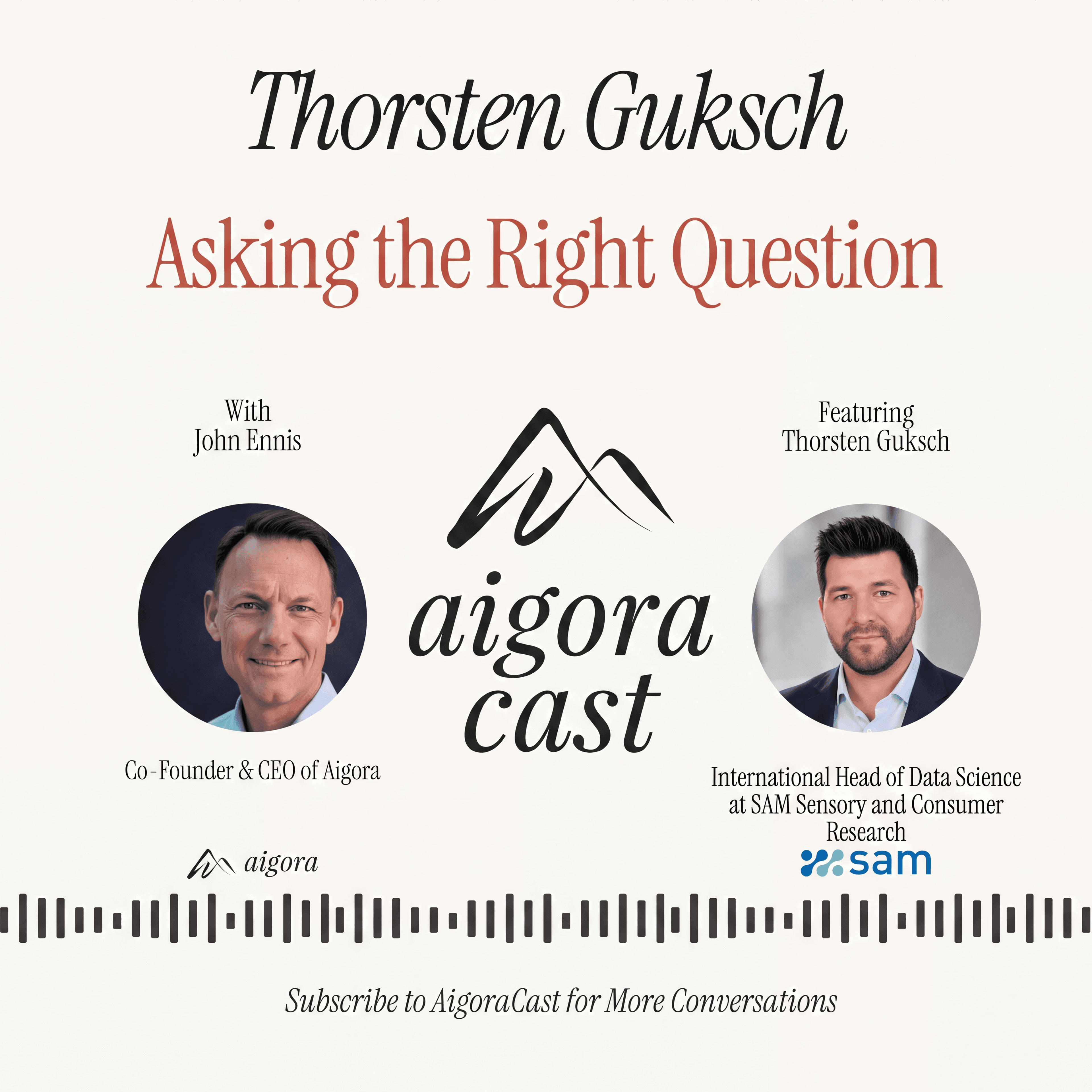
Hi, I'm Dr. John Ennis, CEO at Aigora. In this episode, I enjoyed speaking with Thorsten Guksch from SAM Sensory and Consumer Research. We talked about what happens when sensory science meets modern data science, focusing on how machine learning turns open-ended consumer language into structured sensory information, and why multisensory measurement captures product experience that a single-sense test misses. I hope you enjoy this conversation as much as I did, and remember to subscribe to AigoraCast to hear more conversations like this one in the future!
Tell us what your team is working on through our contact form. We'll review your request and reply within one business day.