
Enterprise research
Many studies reduced to one hedonic map
We pulled the existing research into a source-linked brief, ran a research-informed simulation into a hedonic map, and wrote the target regions in language formulation partners can use.

Evidence at a glance
- Evidence type
- Delivered analysis
- Organization scope
- A major CPG company
- Documented boundary and output
- This case covers the delivered synthesis, simulation, and hedonic-map wording. The company, brands, SKUs, and study identifiers stay confidential.
The situation
Several finished studies still left no single direction. Internal teams and outside formulation partners needed the same target language.
The team already had descriptive analysis, home-use testing, and survey evidence. None of those sources alone settled the reformulation direction. The technical job was to synthesize them, simulate the decision space, and express targets in operational language.
The approach
Assemble the evidence
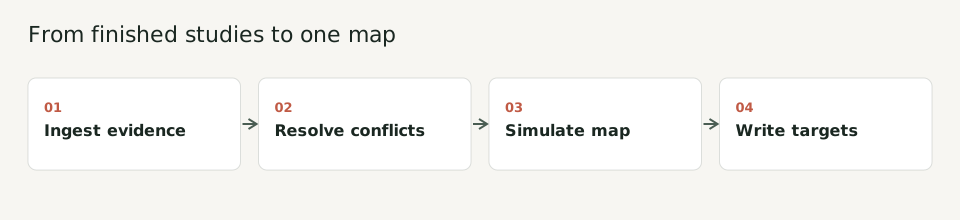
Finished studies go into a source-linked knowledge layer. Conflicts get resolved before any modeling step.
Simulate the map
Synthetic respondents are calibrated to the observed segments, then responses unfold into a shared hedonic map.
Write targets partners can use
The useful regions of the map are described in operational language so internal teams and suppliers aim at the same place.
System or method for this case
What we delivered
- Source-linked strategic brief across the finished studies
- Research-informed simulation calibrated to observed segments
- Hedonic map of current products, alternatives, and candidate directions
- Comparison of strategic options on retention, recovery, and risk axes
- Target wording formulation partners can act on
Technical pieces
Knowledge ingestion of finished studies, Citation-traced synthesis, Synthetic respondent calibration, Unfolding into a shared hedonic map, Semantic characterization of map regions
What changed
Finished studies now feed one source-linked brief and a hedonic map, with target regions written so internal teams and formulation partners aim at the same place.
Discuss a comparable system
Bring the research question, data boundary, and decision the system needs to support.